
A Cure for Despair
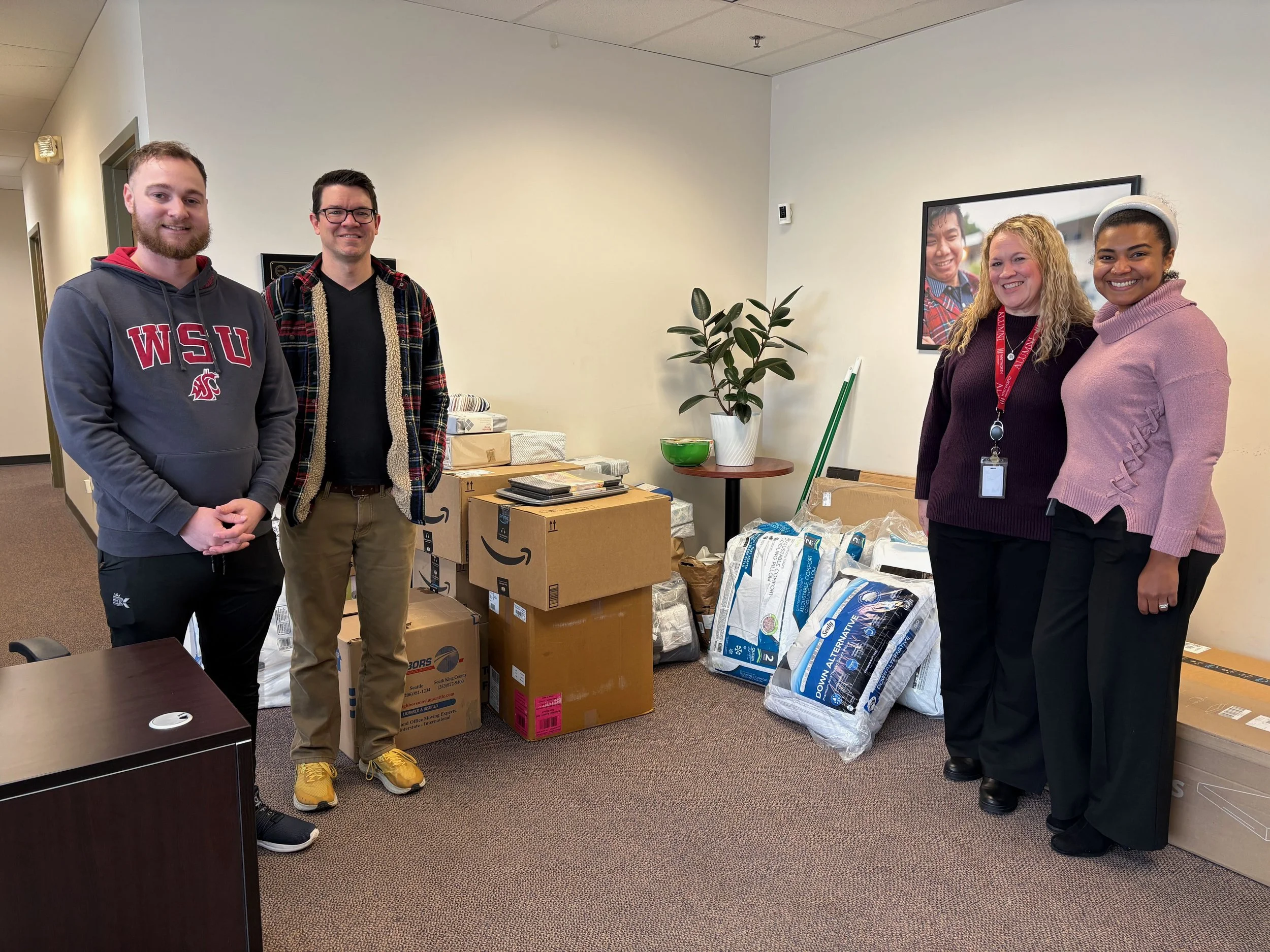
Peering into the downstairs bedroom at 703 Kitsap Street, I said out loud, “Will this all fit in the truck?” I was looking at boxes piled on boxes, mountains of pillows, linen sheets still in their packages piled into miniature towers. Throughout the past week, more and more people had come by to drop gifts off, a steady stream of generosity that belied this present moment of financial stress and political upheaval. Who would have thought we had the capacity? But my eyes didn’t betray me: our little community had produced a small mountain of gifts for people seeking refuge, graciously, generously, joyfully.
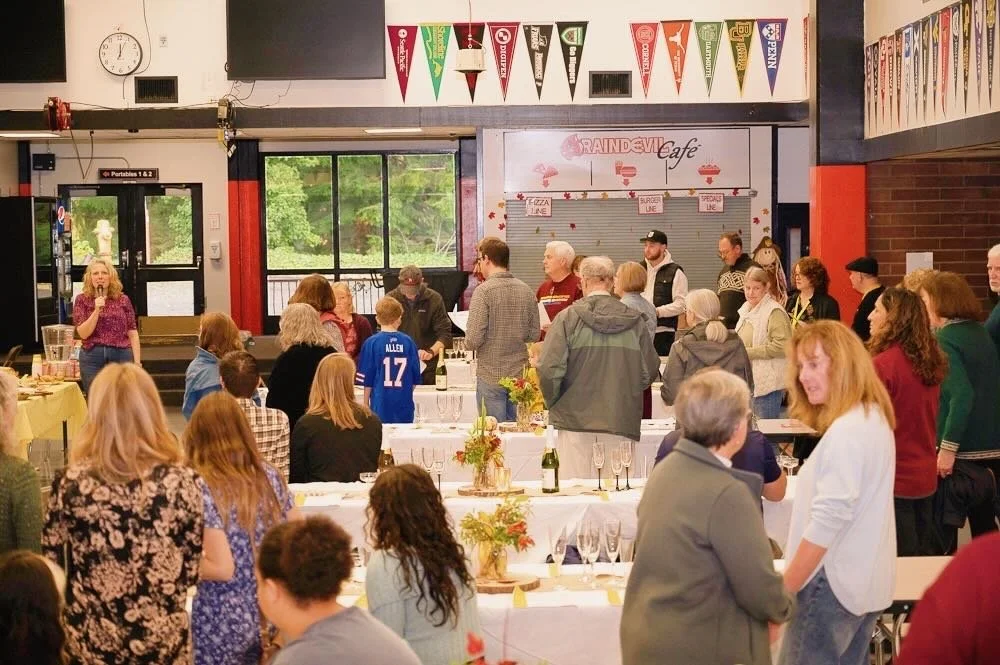
If you were at our Friendsgiving feast on November 16th, I think you would have felt that, even if you didn’t get to see the end result. The mountain was just beginning to pile up, but even before that there was a levity as we squeezed our legs into cafeteria tables and sat across from each other. “How good and pleasant it is when brothers dwell in unity!” the Psalmist says, and we experienced that in the simple act of an early Thanksgiving dinner. How good it was to recite the liturgy, to declare with a solemn glee that “feasting and all enjoyments gratefully taken are, at their heart, acts of war.” How good it was to see, not just a potluck, but good food laid out in abundance in a long row. Silently, at a table off to the side, pillows and boxes began to pile up.
Thankfully, Zach Wilson had brought a beastly Chevy truck and sure enough, between the spacious cab and the bed, there was room for it all. We headed over to drop it all off in Kent, at World Relief Western Washington’s offices there. Despite hearing about and supporting their work for years, I’d never seen it in action. I was curious about what we’d see.
We pulled up at a nondescript office building, backed the truck up, met Hannah Snelling at the door (you might remember her representing World Relief at the Feast), and about 4 or 5 cart loads later the small mountain had moved inside. Moved into the spacious front office, the pile didn’t look as impressive, but Hannah looked at me significantly and said, “You know, we don’t normally see this much from communities the size of Kitsap House. This is a lot.” She offered to give us a tour.
And, well, it was an office space with cubicles. But so much more than that. I saw one cubicle decorated with colorful garlands, toys and activities piled around it, a space for planning programs for children that Hannah called “incredible.” I saw spaces that were used to plan meals, car seats stacked in a corner for transportation, desks set up to help people find homes and jobs. And I saw those people too; a little girl in the lobby shyly running up to me, then running back into the arms of her mother; a man in a classroom slouched in concentration as he learned English, a trio of men standing outside in relaxed conversation, speaking in a language I couldn’t identify. In a word, I saw hope.
It’s easy to feel that things are going to hell in a hand basket. But when I walked through office, when I saw that mountain of gifts, when I sat at that Feast… I got a different view of the world. It wasn’t the urgent, combative, zero-sum view of the world I see on social media. It’s a world where people are moved by the Spirit to generosity even when pay checks aren’t coming in. It’s a world where people, despite everything, could still “treat the sojourner who sojourns with you as the native among you, and… love him as yourself…” (Leviticus 19:34). It’s a world where Jesus is still healing, still restoring, still in charge.
This Thanksgiving, I invite you to see the world that way. As you sit over a meal with others, borrow a line from our Feast liturgy: raise a glass and say together, “All will be well!” All will be well, indeed.